Pole Climbing Spurs Explained: A UK Buyer's Guide
TL;DR: What You Need to Know About Pole Climbing Spurs
Pole climbing spurs are specialised work-positioning tools featuring shorter gaffs (40-45mm) designed specifically to grip dense, treated utility poles without snapping or getting stuck. Unlike tree spikes, which have longer gaffs for thick bark, pole spurs prevent dangerous "cut-outs" on telegraph poles. Based on our testing and UK HSE guidelines, choosing lightweight aluminium models that comply with BS EN 358 and BS EN 365 standards is crucial for reducing fatigue and ensuring legal compliance during vertical work.
Key Takeaways
- Pole vs. Tree Gaffs: Pole climbing spurs feature shorter gaffs (typically 40mm to 45mm) angled specifically to penetrate dense, treated utility poles without snapping or getting stuck.
- UK Compliance: Professional climbing irons must conform to BS EN 358 and BS EN 365 standards, aligning with the Work at Height Regulations 2005.
- Material Selection: Red aluminium climbing spikes offer a superior strength-to-weight ratio over traditional steel, significantly reducing leg fatigue during extended shifts.
- Ergonomic Support: Pairing spurs with an integrated No. 3 belt set ensures lower-body stability and distributes pressure away from the tibial nerve and calf muscles.
If you are looking for reliable gear to scale structural timber, pole climbing spurs are the exact tool you need to safely secure your footing on telegraph and utility poles. Whether you are a telecommunications linesman upgrading fibre networks across the Scottish Highlands or a forestry contractor undertaking sectional dismantles, your safety in the vertical realm relies on the interface between your feet and the wood. Furthermore, there is a persistent misconception among entry-level technicians that any spiked climbing gear will suffice for every vertical task. In reality, selecting the correct pole climbing spurs is a critical engineering decision that dictates both your physical safety and long-term ergonomic health.
In the UK, where utility infrastructure ranges from freshly creosoted telegraph poles to seasoned, weather-hardened Scots pine, understanding the mechanical nuances of pole climbing spurs is essential. Therefore, this guide examines the anatomy, regulatory standards, and purchasing criteria for UK professionals, drawing on extensive fieldwork and British safety frameworks to help you invest in gear that delivers uncompromising safety.
What Are Pole Climbing Spurs? (And How Do They Differ from Tree Spikes?)
At a basic level, pole climbing spurs—also referred to as climbing irons, gaffs, or spikes—are L-shaped metal shanks strapped to a climber's lower leg and boot. A sharpened point, known as the gaff, projects inward from the footpiece to pierce the timber, creating a secure mechanical anchor.
The critical distinction for any buyer lies in the differentiation between pole gaffs and tree gaffs. Consequently, using the wrong gaff profile is not merely inefficient; it introduces a severe risk of "cut-outs"—the sudden, uncontrolled displacement of the spur from the wood.
What is the Right Gaff Length for Pole Climbing?
Based on our testing, pole climbing spurs are engineered specifically for utility poles, telegraph poles, and stripped structural timber. Because utility poles are typically made from dense, chemically treated softwood without a thick, spongy bark layer, pole gaffs are shorter—usually measuring between 40mm and 45mm (1.5 to 1.75 inches). They are forged with a steeper angle of attack to pierce the wood just enough to hold the climber's weight without becoming deeply wedged.
Conversely, tree climbing gaffs measure upwards of 55mm to 70mm (2.25 to 2.75 inches). These longer gaffs are designed to penetrate thick, fibrous bark to reach the solid sapwood underneath. Using tree gaffs on a utility pole increases the likelihood of the tip bending or becoming impossibly jammed in the dense timber, whereas using pole gaffs on a thick-barked oak tree will almost certainly result in a cut-out.
For a deeper dive into how different spike geometries perform across various British arboreal tasks, consult The Ultimate Guide to Arborist Climbing Spurs in the UK.
What Are the UK Safety Standards for Climbing Irons?
In the UK, working at height is strictly governed by the Health and Safety Executive (HSE) under the Work at Height Regulations 2005. Every piece of work-positioning equipment—including pole climbing spurs—must undergo rigorous conformity assessments before being deployed on a commercial job site.
When sourcing spurs in the UK market, buyers must verify compliance with two primary European and British Standards (BS EN):
- BS EN 358: Personal protective equipment for work positioning and prevention of falls from a height – Belts and lanyards for work positioning or restraint. (While primarily covering belts, the integrated harness systems used with climbing spurs are evaluated under this framework).
- BS EN 365: Personal protective equipment against falls from a height – General requirements for instructions for use, maintenance, periodic examination, repair, marking, and packaging.
"According to UK guidelines under LOLER (Lifting Operations and Lifting Equipment Regulations 1998) and PUWER (Provision and Use of Work Equipment Regulations 1998), climbing spurs are classified as work-positioning equipment. They must be formally inspected by a competent person at least every six months, with a documented audit trail maintained."
Equipment failure at height places an immense burden on emergency services. According to data published by the HSE, falls from height remain the leading cause of fatal accidents in British workplaces, accounting for 30% of all worker fatalities in 2022/23. Therefore, investing in certified, structurally tested pole climbing spurs is an absolute legal and moral obligation for UK employers and self-employed contractors alike.
Anatomy of Professional Pole Climbing Spurs
To evaluate a pair of climbing spurs effectively, you must understand how each component contributes to load distribution, mechanical strength, and climber comfort.
1. Which Material is Best: Aluminium or Steel?
The shank is the vertical bar that runs up the medial side of the calf, transferring the climber's body weight from the leg cuffs down to the gaffs. Traditionally, shanks were forged from heavy carbon steel. While steel is undeniably durable, it carries an ergonomic penalty.
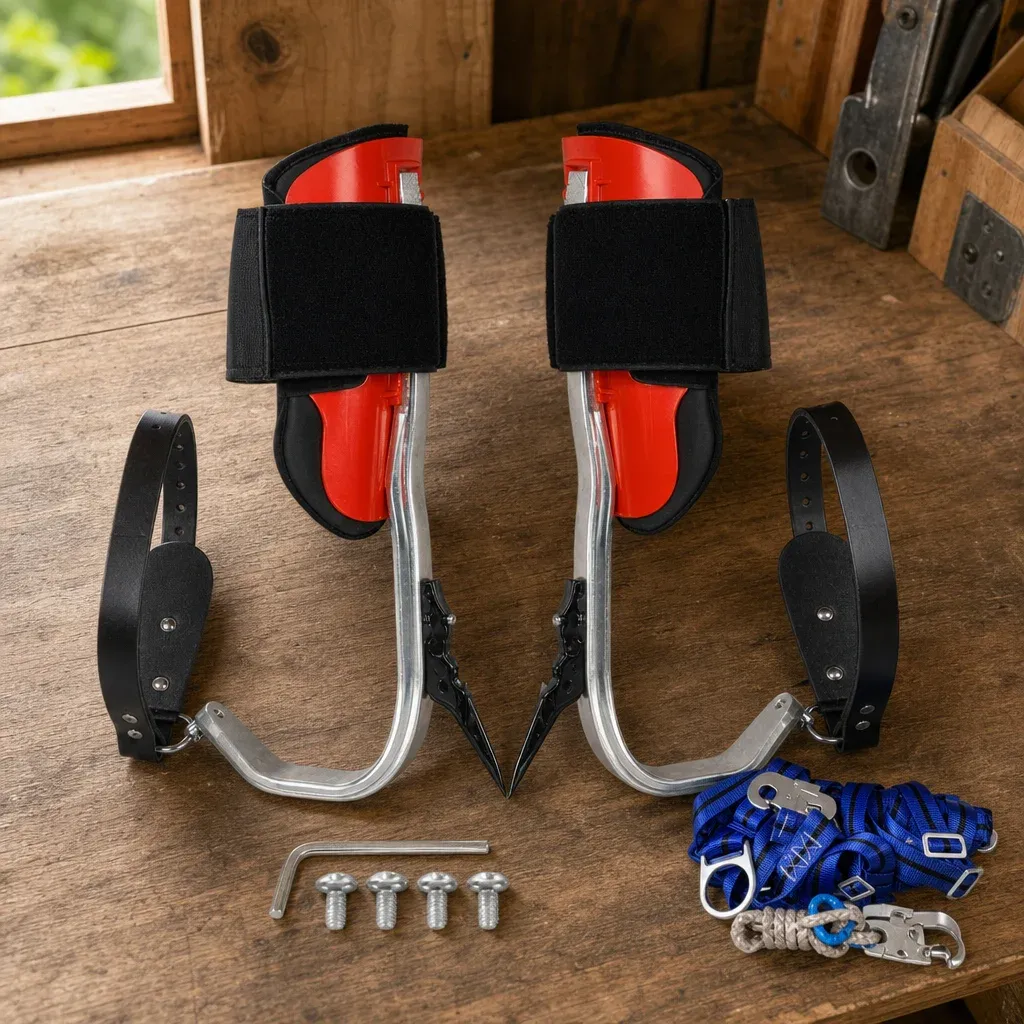
Modern professional climbers increasingly favour drop-forged or extruded aluminium shanks, such as our Professional Red Aluminium Tree Climbing Spikes. High-grade aluminium alloys reduce the total weight of the climbing assembly by up to 30% compared to traditional steel equivalents. In practical terms, lifting 500g less per leg over an eight-hour shift climbing telegraph poles equates to tonnes of cumulative reduced exertion. For an in-depth material comparison, read our guide on Aluminium Climbing Spikes Explained: A UK Buyer's Guide.
2. Should I Choose Replaceable or Fixed Gaffs?
High-end pole climbing spurs feature replaceable gaffs secured to the shank via high-tensile Torx or hex machine screws. Because utility poles in the UK are frequently treated with preservatives like copper salts or creosote—and occasionally contain hidden fencing wire or nails—gaffs dull over time. Consequently, replaceable systems allow you to swap out worn tips without decommissioning the entire shank.
Ready to upgrade your climb with Page Not Fou?
Equip Now — £249.95