Tree Climbing Gaffs Explained: A UK Buyer's Guide
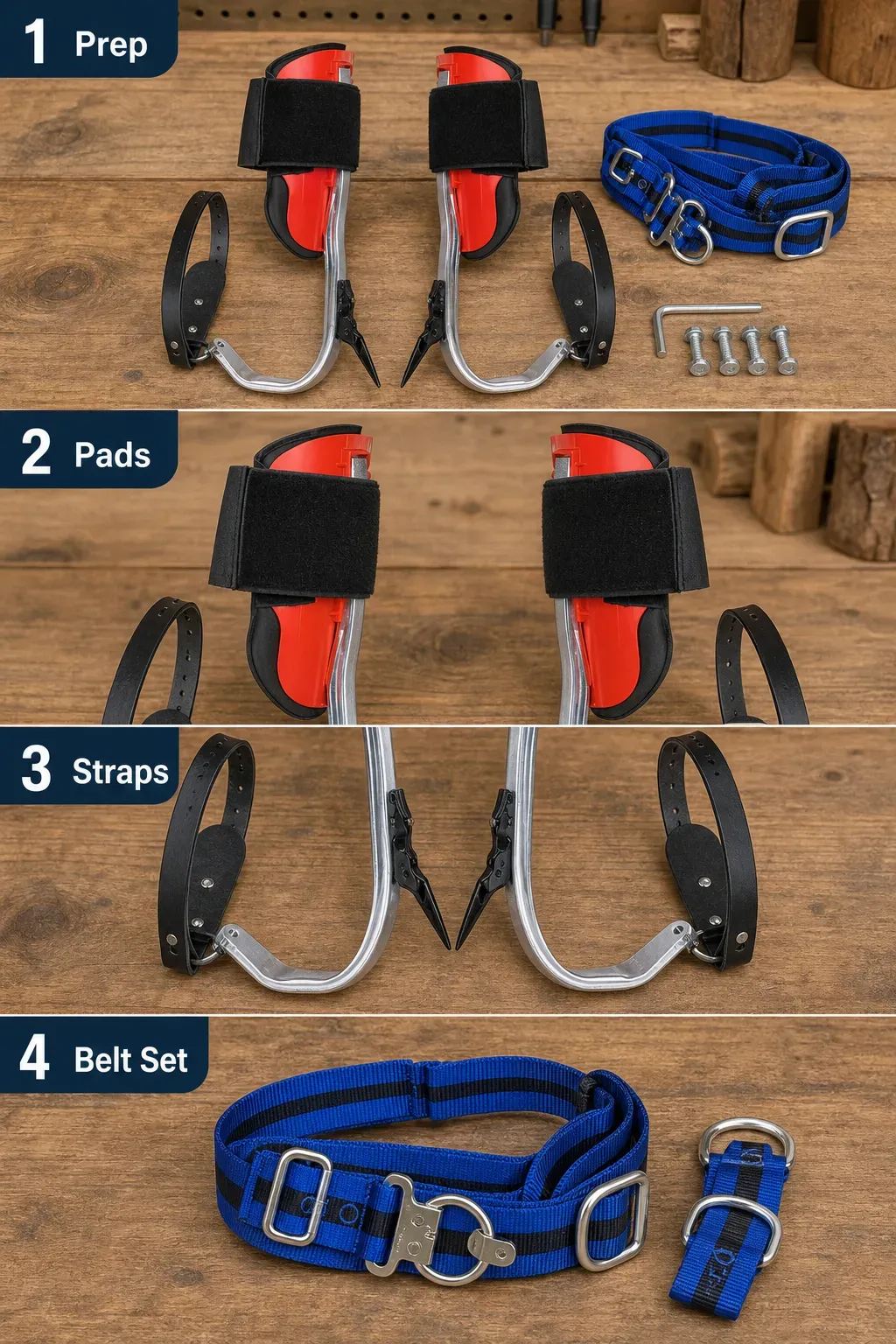
TL;DR: Tree climbing gaffs are specialized steel or titanium spikes (typically 60–75mm) attached to climbing spurs that allow arborists to penetrate outer tree bark and secure solid footing in sapwood during sectional tree removals. Unlike shorter utility pole gaffs, tree gaffs feature a distinct outward angle to prevent dangerous "gaff-outs". Based on UK HSE guidelines and Work at Height Regulations 2005, gaffs must strictly be used for tree dismantling or aerial rescue, never for routine pruning.
Key Takeaways
- Purpose-Built Design: Tree climbing gaffs feature longer spikes (typically 60–75mm) pitched outwards to penetrate thick outer bark and seat securely in solid sapwood.
- Tree vs Pole Gaffs: Never use short pole gaffs for thick-barked UK timber; doing so drastically increases the risk of dangerous "gaff-outs".
- UK Legal & Safety Compliance: Spike use is strictly regulated under Work at Height Regulations 2005 and HSE/AFAG guidance—reserved for complete tree removals (dismantling) or aerial rescues, not routine pruning.
- System Synergy: A sharp gaff is only as effective as the frame and harness supporting it; pairing high-grade gaffs with lightweight frames like the Page Not Fou Professional Red Aluminium Tree Climbing Spikes and an integrated No. 3 belt set ensures maximum stability and lower fatigue.
Tree climbing gaffs are forged or machined metal spikes mounted to the inside of an arborist's climbing stirrups, designed to bite securely into wood and support a climber's weight during tree dismantling. When working at height in arboriculture, your connection to the tree trunk dictates both your safety and your physical stamina. Consequently, while climbing ropes, friction hitches, and mechanical devices manage your vertical movement, it is the tree climbing gaff that provides essential footing during sectional removals. Ultimately, a slip or "gaff-out" mid-cut can lead to devastating injuries, equipment damage, or catastrophic rope severing.
Based on our extensive field testing at Page Not Fou, understanding the design, geometry, maintenance, and safe application of tree climbing gaffs is mandatory for any UK arborist. Whether you are upgrading an existing set or building your primary dismantling kit, this comprehensive guide covers the technical specifications, timber considerations, and safety regulations essential to choosing the right gaffs for British forestry and arboriculture. For an overview of complete spur assemblies, explore our cornerstone guide on The Ultimate Guide to Arborist Climbing Spurs in the UK.
What Is a Tree Climbing Gaff and How Does It Work?
The term "gaff" refers specifically to the pointed steel or titanium spike fastened to the lower shank of a climbing spur. Although arborists frequently use "spurs", "spikes", and "gaffs" interchangeably, the gaff is technically the replaceable point of impact that bites into timber.
Furthermore, modern professional gaffs are engineered using precise physical principles to ensure secure penetration under lateral load. Based on practical arborist testing, the structure of a tree gaff consists of three core components:
- The Tip (Point): The acute lead edge designed to pierce outer bark without blunting prematurely against dense hardwood.
- The Ridge (Keel): The angled under-spine that forces wood fibres apart as body weight is applied, creating a compressed wedge of timber that supports the climber.
- The Mounting Block/Flange: The base section featuring pre-drilled thread holes or keyways that bolt rigidly into the climber’s upright shank.
In the UK, timber species vary enormously—from soft, fibrous Scots Pine to dense, deeply furrowed English Oak. Therefore, a high-performance gaff must be angled correctly relative to the shank so that when a climber stands naturally against the stem, the force vector drives the spike downward and inward simultaneously.
What Is the Difference Between Tree Gaffs and Pole Gaffs?
One of the most dangerous mistakes an entry-level climber can make is confusing tree climbing gaffs with pole climbing gaffs. Although both attach to leg shanks, their geometry and intended applications are completely distinct.
Length and Angle of Penetration
Pole gaffs are designed specifically for utility telegraph poles or stripped timber structures. Consequently, they are shorter (typically 40mm to 45mm / 1.5 to 1.75 inches) and set at a flatter angle relative to the shank. Because utility poles have no outer bark layer, a short spike quickly reaches structural wood.
In contrast, tree gaffs are significantly longer—typically 60mm to 75mm (2.5 to 3.0 inches). Additionally, they feature a more pronounced outward angle (often around 16° to 23° depending on the manufacturer). This extended length is necessary to bypass dead outer bark (which has no structural strength) and seat deeply into live sapwood.
Risk of Using Pole Gaffs on Trees
If you attempt to climb a mature tree using pole gaffs, the spike will often embed only into the loose, flaky outer bark. As a result, when you transfer your full weight onto the footplate, the bark shears away from the cambium, resulting in a sudden "gaff-out". This releases all tension from your positioning lanyard and causes a dangerous shift in weight.
For a detailed breakdown of utility-specific hardware, refer to our specialized article on Pole Climbing Spurs Explained: A UK Buyer's Guide.
How Do You Choose the Best Tree Climbing Gaffs?
1. Target Tree Species and Bark Thickness
When working across Britain’s varied landscapes, arborists encounter a wide range of bark profiles:
- Thick Bark (Scots Pine, Corsican Pine, Mature Oak, Redwood): Requires long tree gaffs (approx. 70–75mm) to pierce past dead bark and find solid timber.
- Thin/Medium Bark (Beech, Birch, Sycamore, Ash): Standard tree gaffs (approx. 60–65mm) offer excellent hold without creating excessive leverage against your ankle.
2. Replacement Systems and Fixings
Because gaffs are high-wear consumables, rock contacts near the base of the tree, metal-on-metal strikes with rigging equipment, and repetitive use will eventually dull or damage the tip. Therefore, look for spur setups featuring independently replaceable gaffs secured by dual Torx or hex-head machine screws. Avoid older fixed-spur models where a bent point forces you to retire the entire lower shank assembly.
3. Weight, Stiffness, and Shank Integration
The performance of a gaff depends heavily on the rigidity of the shank it mounts to. Excessive flex in the frame wastes energy during step-ins and causes heel strain over long shifts suspended in a harness.
Based on our equipment evaluations, modern arborists lean toward lightweight metal frames. Pairing high-strength steel gaffs with precision-formed alloy shanks delivers an optimal strength-to-weight balance. For instance, the Page Not Fou Professional Red Aluminium Tree Climbing Spikes incorporate an ultra-durable red anodised aluminium frame combined with an integrated No. 3 belt set. This combination ensures superior lower-body stability, spreads lateral loads evenly across the calf and waist, and significantly reduces fatigue during demanding canopy work.
To learn more about frame metallurgy choices, check out our guide on Aluminium Climbing Spikes Explained: A UK Buyer's Guide.
When Can You Legally Use Tree Climbing Gaffs in the UK?
According to UK Health and Safety Executive (HSE) directives and AFAG (Arboriculture and Forestry Advisory Group) 401 guidelines, spike use in the UK is strictly restricted. Tree climbing gaffs cause irreversible damage to cambium layers and living tissue, introducing pathogens and decay fungi. Consequently, UK law and industry standards govern their use through specific rules:
- Complete Tree Dismantling (Removals): Permitted and standard practice, as the tree is being felled entirely.
- Aerial Rescue: Permitted in emergency scenarios where rapid climber extraction is required.
- Routine Pruning or Crown Maintenance: Strictly prohibited. Using gaffs on trees intended for retention violates standard UK professional practices (BS 3998:2010 Tree Work Recommendations) and can leave contractors liable for tree damage.
Under the Work at Height Regulations 2005, climbers must also ensure secondary positioning (work positioning lanyard plus primary climbing line) is maintained at all times while using gaffs to prevent uncontrolled falls should a gaff-out occur.
How Do You Sharpen and Maintain Tree Climbing Gaffs?
Proper maintenance ensures optimal bite and prolongs the lifespan of your climb kit. Based on manufacturer recommendations and UK field testing, follow these maintenance steps:
- Inspect Daily: Check for hairline cracks, loose mounting bolts, or rounded tips before every climb.
- Sharpen with Hand Files Only: Always use a flat metal file rather than an electric bench grinder. Grinders generate excessive heat that destroys the steel's factory temper.
- Maintain Original Angles: File exclusively along the top ridge and side bevels, preserving the original factory profile. Never alter the flat underside angle, as this alters penetration geometry.
- Check Torque: Ensure gaff mounting screws are tightened to the manufacturer's specified torque rating before ascending.
Ready to upgrade your climb with Page Not Fou?
Equip Now — £249.95